Who Is Jesus Christ ?
When you hear the name Jesus, what comes to mind? A teacher? A prophet? Or something even more profound? In Christianity, Jesus is not merely a historical figure—he is the center of faith, hope, and salvation. Christians believe that Jesus is the Son of God—a divine being whose life and deeds have forever altered human history. According to the New Testament, he is also recognized as the Messiah—the promised Savior whose arrival was foretold in the scriptures long before his actual coming.

This belief is not merely symbolic; it is deeply theological. Jesus is viewed as being both fully human and fully divine—a unique bridge between God and humanity. Imagine a translator who not only understands both languages perfectly but is also an integral part of both worlds. This is how Christians perceive Jesus: as the one who effortlessly connects heaven and earth. His role is not passive, either; through his teachings, his actions, and ultimately, his sacrifice, he actively draws people closer to God.
The concept that Jesus is the Messiah holds immense significance in its own right. For centuries, Jewish scriptures had spoken of a coming Savior—someone who would restore the broken relationship between God and humanity. Christians believe that Jesus fulfilled these prophecies, thereby earning the title of “Christ”—which literally translates to “the Anointed One.” This dual identity—as both the Son of God and the Messiah—forms the very bedrock of the Christian faith and shapes everything that follows.
The Role of the Trinity
God—Father, Son, and Holy Spirit
One of the most intriguing—and sometimes perplexing—concepts in Christianity is the ‘Trinity.’ How can God exist in three forms while remaining one? Think of it like water: it can exist as a liquid, ice, or steam, yet it remains the same substance. Similarly, Christians believe in a single God who exists as three persons: the Father, the Son (Jesus), and the Holy Spirit.
Jesus is not merely a messenger of God; He is regarded as ‘God the Son’—fully divine and equal to the Father. This concept lies at the very heart of Christian theology and helps explain why His life and death hold such profound significance. Had Jesus been merely human, His sacrifice might have inspired us—but it could not have brought about our salvation. His divine nature endows His actions with eternal impact.
The Concept of One God in Three Forms
This “three-in-one” concept is known as the ‘Trinitarian doctrine,’ and it has been debated and refined over the centuries. The early Church grappled with questions such as: How could Jesus pray to God while being God Himself? How could He be both fully human and fully divine simultaneously? These discussions ultimately led to the formulation of the formal doctrines that define mainstream Christianity today.
The Trinity is not merely a theological puzzle; it is a framework for understanding how God interacts with the world. The Father creates, the Son redeems, and the Holy Spirit sustains. Together, they form a unified yet dynamic presence that shapes the Christian understanding of reality.
The Birth and Early Life of Jesus
Virgin Birth Explained
The story of Jesus begins with a miracle—the Virgin Birth. According to the Gospels, Jesus was born to Mary, who conceived through the power of the Holy Spirit. This event is not merely an interesting detail; it holds profound significance. It signifies that Jesus’s origin is divine, rather than solely human.

Think of it this way: if a story begins with something extraordinary, you know right from the start that it is heading in a significant direction. The Virgin Birth lays the foundation for everything that follows, emphasizing that Jesus is no ordinary person.
Cultural and Religious Context
Jesus was born into a Jewish family, during a time rife with political tension and religious anticipation. The land was under the rule of the Roman Empire, and many Jews were eagerly awaiting a Messiah who would bring them deliverance. Rather than arriving as a political warrior, Jesus came as a humble teacher and healer.
This contrast is powerful. It challenges expectations and redefines what true leadership and salvation look like. Instead of conquering nations, Jesus focused on transforming people’s hearts—a theme that permeates his entire life and teachings.
Jesus’s Teachings and Ministry
Parables and Moral Lessons
Jesus did not teach through complex philosophical treatises. Instead, he employed simple stories known as “parables”—short, intuitively understandable narratives that conveyed deep spiritual truths. Whether speaking of the lost sheep or the forgiving father, his lessons were easy to grasp, yet their meaning ran profound.
These teachings centered on themes of love, forgiveness, humility, and faith.
Imagine being told that loving your enemy is just as important as loving your family—that’s the kind of radical thinking Jesus introduced. His words weren’t just instructions; they were invitations to live differently.
Miracles and Their Meaning
Alongside his teachings, Jesus performed miracles—healing the sick, calming storms, and even raising the dead. These acts weren’t just displays of power; they were signs pointing to something greater. They demonstrated compassion and revealed his divine authority.
For believers, these miracles serve as evidence of who Jesus is. They show that he has power over nature, illness, and even death itself. It’s like watching someone bend the rules of reality—only to realize they wrote the rules in the first place.
Crucifixion and Sacrifice
Why Jesus Was Crucified
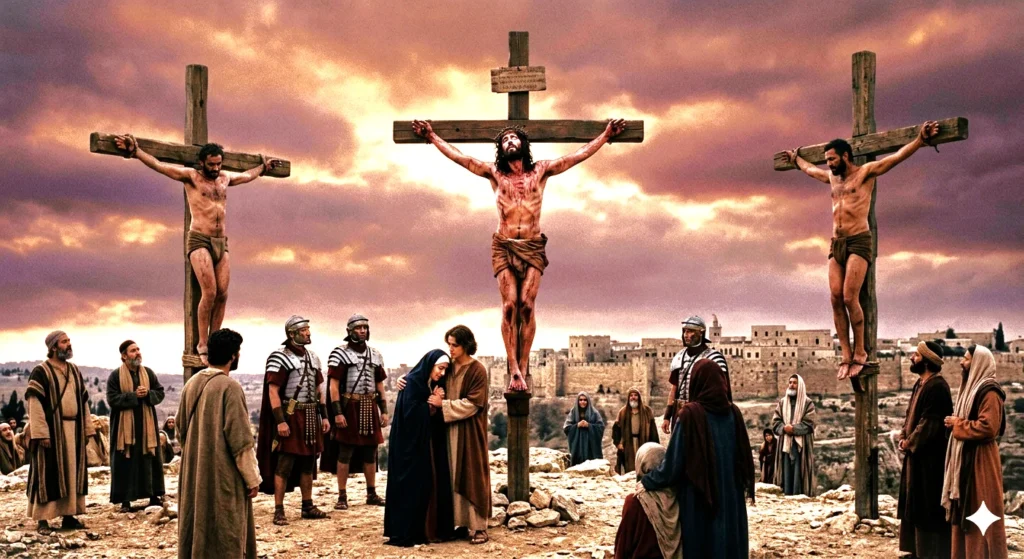
The crucifixion of Jesus is one of the most pivotal moments in Christian history. Arrested, tried, and executed by crucifixion, Jesus faced a brutal death. But why did this happen? From a historical perspective, he was seen as a threat to authority. From a theological perspective, something much deeper was at work.
Christians believe that Jesus willingly accepted this fate. He wasn’t a victim of circumstances—he was fulfilling a divine mission. His death is seen as an act of obedience and love, a sacrifice made for the sake of humanity.
The Meaning of Atonement
Here’s where things get profound. Christianity teaches that Jesus’s death atoned for sin—meaning it repaired the broken relationship between humans and God. Think of sin as a debt that humanity couldn’t pay. Jesus steps in and pays it in full.
This concept of redemption is central to Christian faith. It transforms the crucifixion from a tragic event into a powerful symbol of hope and restoration.
Resurrection and Ascension
Rising from the Dead
Three days after his death, Jesus rose from the dead—a cornerstone belief in Christianity. This event isn’t just celebrated; it’s essential. Without the resurrection, the entire foundation of Christian faith would collapse.

The resurrection signifies victory over death and sin. It’s like the ultimate comeback story—one that redefines what’s possible. For believers, it confirms that Jesus is truly divine and that his promises are trustworthy.
Ascension to Heaven
After appearing to his followers, Jesus ascended to heaven, where he is believed to sit at the right hand of God. This event marks the completion of his earthly mission and the beginning of a new phase in the relationship between God and humanity.
His followers now await his return, known as the Second Coming, when he will judge the world and establish eternal justice.
Salvation and Eternal Life
Concept of Redemption
At the heart of Christianity lies the promise of salvation. Through Jesus’s life, death, and resurrection, believers are offered forgiveness and eternal life.
This isn’t just about escaping punishment—it’s about restoring a relationship. Imagine being separated from someone you love and finally being reunited—that’s the kind of restoration Christianity talks about.
Jesus as the Lamb of God
Jesus is often referred to as the Lamb of God, symbolizing sacrifice and purity. Just as lambs were used in ancient rituals, Jesus’s sacrifice is seen as the ultimate offering for sin.
This imagery reinforces the idea that his death wasn’t random—it was purposeful, meaningful, and transformative.
Nature of Jesus – Human and Divine
The Hypostatic Union
One of the most intriguing aspects of Christian theology is the belief that Jesus is both fully human and fully divine. This is known as the hypostatic union. It means that Jesus experienced hunger, pain, and temptation just like any human—but without sin.
Theological Debates and Interpretations
This concept hasn’t always been universally accepted. Throughout history, theologians debated how these two natures coexist. Some emphasized his divinity, while others focused on his humanity.
These debates shaped Christian doctrine and led to the development of creeds that define mainstream beliefs today.
Key Events in Jesus’s Life
Baptism and Transfiguration
Jesus’s baptism marks the beginning of his ministry, while the transfiguration reveals his divine glory. These events highlight key moments where his identity is publicly affirmed.
Read this too:- Why was Jesus Christ of Nazareth crucified? About Jesus Christ
Resurrection and Second Coming
From resurrection to ascension, and eventually the anticipated return, these milestones define the Christian narrative of hope and future redemption.
The Importance of Jesus in Christianity Today
Even today, Jesus remains the central figure of Christianity, influencing billions of lives worldwide. His teachings continue to inspire love, compassion, and faith across cultures and generations.
Whether seen as a savior, teacher, or divine being, Jesus’s impact is undeniable. His story isn’t just history—it’s a living faith that continues to shape the world.
Conclusion
My dear ones, in today’s post, you have explored the question: “Who Is Jesus Christ?” At the very heart of Christianity, Jesus Christ stands as both a historical figure and a divine presence. His life narrates a saga of humility, self-sacrifice, and love, while His death and resurrection convey a message of hope and salvation.
From the doctrine of the Trinity to the concept of salvation, every major tenet of the Christian faith is inextricably linked to Him. Understanding Jesus is not confined merely to the realm of theology; rather, it is about discovering the profound meanings of faith, the purpose of life, and humanity’s connection with God. The Kingdom of Heaven has drawn very near; therefore, let everyone remain prepared. May God bless you.